Your BMI can look “fine” while your health risk quietly climbs—or look “bad” while you’re actually doing okay.
Quick Take
- A long-running convenience tool became a personal verdict, even though it was never built to measure health.
- A major U.S. study following adults for 15 years found BMI didn’t predict who died, but higher measured body fat did.
- Newer definitions add waist measurements and can reclassify roughly two-thirds to three-quarters of U.S. adults as obese.
- The practical question isn’t “What’s my BMI?” but “Where is my fat, and what is it doing to my metabolism?”
BMI’s Original Sin: A Math Shortcut Mistaken for a Medical Diagnosis
BMI started in the 1830s as a way to describe an “average man,” not to forecast heart attacks or decide who gets lectured at an annual physical. Insurance companies later found it useful because it was fast, cheap, and easy to standardize. Clinics then treated it like a vital sign: one number, one label. That history matters because it explains today’s frustration: BMI measures size, not composition, and it ignores where fat sits.
BMI’s blind spot shows up in everyday contradictions. A muscular 50-year-old who lifts twice a week can land in “obese” territory while carrying low body fat. A 62-year-old with a “normal” BMI can carry a high amount of abdominal fat and still get a reassuring chart result. Common sense says those people are not the same. The science now says the same thing: body composition and fat distribution carry the story BMI can’t tell.
The 15-Year Data Point That Put BMI on Trial
A University of Florida Health team analyzed 4,252 U.S. adults over 15 years and compared BMI against a direct body-fat measure using bioelectrical impedance analysis, the kind of scan many clinics can actually afford. Their headline result landed like a cold splash of water: BMI showed no statistically significant association with mortality risk, including deaths from heart disease. Higher body fat measured by impedance, on the other hand, tracked with sharply higher mortality.
That doesn’t mean weight never matters. It means the weight-to-height ratio can miss the mechanism. Fat tissue is biologically active; it influences inflammation, insulin resistance, blood pressure, and triglycerides. Visceral fat, in particular, behaves less like harmless padding and more like an organ that taxes the heart and liver. When a measure fails to separate fat from muscle or fails to flag belly-fat accumulation, it can mislead patients in both directions.
Why Waistlines Are Back in the Conversation, and Why That’s Uncomfortable
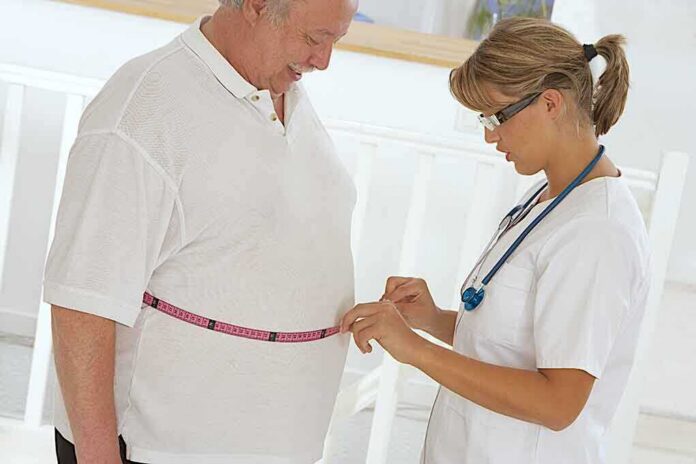
Late 2025 and early 2026 brought an even bigger surprise: proposals and analyses that incorporate waist circumference and waist-to-height or waist-to-hip ratios can reclassify far more Americans as obese than BMI alone. One large analysis using new criteria pegged obesity around 68.6% compared with 42.9% by BMI, and other reporting pushed the number closer to three in four adults. That gap isn’t statistical trivia; it changes who gets labeled “at risk.”
The group driving the new numbers includes people who look “average” in clothes and often pass through routine checkups without urgency. Researchers describe a sizable slice of adults with normal BMI but elevated waist measures, sometimes called anthropometric-only obesity. The uncomfortable truth is that belly fat can stack the deck toward diabetes and cardiovascular disease even when the scale behaves. For older adults, that risk grows because muscle mass often declines while fat mass redistributes.
How to Use BMI Without Letting It Use You
Adults over 40 don’t need another purity test; they need a workable dashboard. Treat BMI as a rough screening tool, not a verdict. Use it to notice trend lines, not to define your health identity. Then add at least one measure that reflects distribution and composition: waist circumference, waist-to-height ratio, or a body-fat estimate from a clinic-grade impedance device. The goal stays old-fashioned: reduce heart and diabetes risk, preserve strength, and keep mobility.
Clinics and insurers will argue about which metric belongs in guidelines, partly because BMI is embedded in forms, billing codes, and public-health reporting. The conservative lens here favors practicality and measurable outcomes: use tools that predict real-world harm and avoid labeling millions of functioning adults in ways that trigger unnecessary medication or stigma. Broader classifications can help catch hidden risk, but they can also inflate “disease” counts without improving personal responsibility, diet quality, or fitness.
The Real Question to Ask Your Doctor in 2026
Ask for a risk conversation that matches your actual body and habits: “Do I have excess fat, especially around the waist, and is it showing up in my blood pressure, A1C, lipids, or liver enzymes?” That line of questioning respects biology and avoids the lazy shortcut of treating a single number as destiny. The best-case future keeps BMI for population tracking while shifting individual care toward composition, strength, and metabolic markers that can be improved.
Adults don’t need to panic about BMI; they need to demote it. Use it like a weather forecast, not a court sentence. If your BMI is high but your waist, strength, labs, and conditioning look solid, you’ve earned a more nuanced plan than “lose weight.” If your BMI is normal but your waist is creeping up and your labs are trending the wrong way, you’ve earned earlier action than “see you next year.”
Sources:
UF Health study shows BMI’s weakness as a predictor of future health
Nearly half of American adults will be obese by 2035, study warns
Study suggests most Americans would be classified as obese under new criteria
Updated criteria for obesity classification increase US obesity prevalence to 68.6%
Under new criteria, 3 in 4 U.S. adults considered obese
Does Your BMI Really Affect Weight Loss? A 2026 Deep Dive Into What Actually Matters
Obesity rise could affect 126 million American adults by 2035