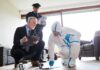
“Good luck,” a Long Beach officer told federal agents as local police pulled away from a hostile crowd.
Story Snapshot
- Body-camera video captures a Long Beach officer saying they were ordered to leave, telling federal agents, “Good luck.”
- Police say they cleared the street so agents could exit and left when the public-safety need ended.
- Officials confirm a handcuffed, bleeding man and reports of vehicle vandalism at the scene.
- The clash exposes the gap between federal immigration work and local sanctuary-era priorities.
What The Camera Shows And Why The Words Landed Like A Grenade
Released body-camera footage records a Long Beach officer telling a federal immigration agent that local officers were ordered to pull out and that agents would be on their own, capped with, “Good luck.” The clip also shows neighbors surrounding or blocking vehicles, loud confrontations, and officers pushing to clear a path before they depart. The line hits hard because it sounds like a shrug at duty. The department attributes the order to a supervisor, not a field hunch.
Local police say they came because federal personnel called for emergency help, citing vehicle vandalism and a person who needed medical aid. The department reports that an officer found a handcuffed adult being detained by federal agents who was bleeding and that medical aid was requested. That description sets the stage for a fast-moving, tense scene where roles can blur. It also shows federal agents asked for help and expected a protective presence as they wrapped their operation.
The Department’s Rationale: Clear The Street, Then Leave
Spokesperson Allison Gallagher says officers prioritized de-escalation, kept the peace, and cleared the roadway so federal agents could leave. She says they left once there was no longer a public-safety need. That account matches parts of the footage, which shows officers trying to open the route. The department also stresses that local officers did not conduct immigration enforcement and made no arrests tied to the federal action, consistent with city policy lines.
That narrow framing angers many readers because it treats the hazard as traffic, not the crowd that hemmed in federal agents. It also clashes with common-sense expectations that when one badge calls another for help, the backup stays until the threat fades for everyone. The department says some agents later followed officers to a secure police lot and were told to leave, which underscores how quickly the shared mission broke apart after the route cleared.
What Is Disputed And What Is Not
The body-camera record is partial. It does not show the first moments or the full arc of the order to withdraw. That gap matters. It prevents a perfect timeline of risk and motive. What is not in dispute is the order to leave, the “Good luck” remark, the request for emergency help, the bleeding detainee, and the choice to disengage after the street opened. City officials have also pressed for reviews of force used during the federal action, placing that question on a separate but related track.
The federal description of their target as an at-large criminal also remains thin in public files. Without a warrant number or conviction record in the open record, that claim cannot be fully checked here. That does not change what the video captures about interagency support. It does explain why city leaders emphasize force reviews and why critics say the police framed the scene to minimize their duty to stand by fellow officers under pressure.
The Bigger Fault Line: Cooperation Without A Contract
No federal law forces cities to assist federal immigration operations. Courts and policy groups have said local agencies can choose how much to cooperate. That legal freedom creates gray zones on the street. When agents call for help in a hostile crowd, the answer depends on local policy, supervisor risk calls, and politics. Research shows agency rules and organization predict cooperation more than party labels alone, which fits what happened in Long Beach.
🛑 Full Body Cam Long Beach Police Leave ICE Agents on Their Own 🛑
On Oct. 17, 2026, ICE ran a targeted operation in North Long Beach near Ellis and Locust to arrest an at-large criminal illegal alien. DHS says Ricardo Gonzalez, 40, smashed a government vehicle's side mirror… https://t.co/n3KHS1SbeC pic.twitter.com/ilt2Yxvafh
— Katie K USA (@KimKatieUSA) November 23, 2026
Conservative readers see a simpler standard: when danger spikes, you do not leave your partners cornered. That view prizes duty, order, and the rule of law over optics. On the facts we have, the clip confirms withdrawal and the stinging sendoff. The department says the safety need ended. The video shows a crowd still hot as officers rolled out. Until the full record lands, the best read is this: the city met the minimum, not the moment.
Sources:
nypost.com, laist.com, socialecology.uci.edu
© targetdailynews.com 2026. All rights reserved.