An emergency room nurse on Montana’s highest peak turned himself into the patient, then calmly walked 10 brutal miles with a metal pole skewering his torso to save his own life.
Story Snapshot
- David Cifaldi, a 32-year-old nurse, slipped on Granite Peak and was impaled through his side by his trekking pole.
- He used his medical training to check his own wound, decide it was not instantly fatal, and stay calm.
- With the pole still in his body, he and two friends climbed about 10 miles over six and a half hours back to the trailhead.
- Rescuers then moved him to Intermountain Health in Billings, where surgeons safely removed the pole.
A normal summit day turns into a nightmare at 11,800 feet
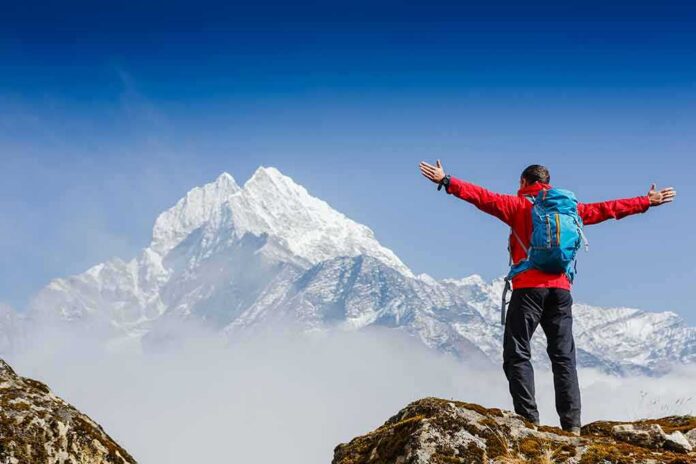
David Cifaldi started that July morning like thousands of other hikers chasing a summit. Granite Peak, at 12,799 feet, is Montana’s highest mountain. It is not a casual walk. The route includes loose rock, steep slopes, snowfields, and long miles where a small mistake can become a life-or-death problem. Cifaldi, a nurse from Billings, set out with two friends, Jesse Ross and Brad, expecting a hard but satisfying climb, not a trauma case.
Hours into the ascent, the three men were roughly 10 miles in and near 11,800 feet of elevation when the climb changed in one step. Cifaldi slipped on unstable rocks. As he fell, one of his trekking poles drove into his side and kept going. The pole punched through his torso, passing through the large back muscle known as the latissimus dorsi, and came out the front, with several inches of shaft showing on both sides. In an instant, the man who usually treats wounds became the one bleeding on the mountain.
The nurse brain takes over on the side of a mountain
Cifaldi did not panic. He did what trained medical staff are supposed to do: he assessed. He checked for heavy bleeding. He looked for signs of shock, like dizziness or confusion. He felt where the pole sat in his body. He noticed that he could still breathe and move without the worst pain. He judged that the pole had gone through soft tissue, missing organs and major blood vessels, and that he was stable enough to think clearly.
That self-check led to the most controversial decision of the story. Jesse Ross used a Garmin satellite communicator to call search and rescue. Help was on the way. But helicopter evacuation from a rugged peak is expensive and risky. Because Cifaldi was stable, not pouring blood, and not fading, the group chose to hike out rather than wait for a chopper. Some viewers later praised that choice as tough and responsible. Others, especially people who pay taxes for rescue services, wondered why anyone would walk instead of taking the fastest ride off the mountain.
Ten miles down with a pole through his torso
The descent would test that decision and their teamwork. The three men turned around to retrace their route over snowfields, boulder fields, and steep sections, all while one of them was literally skewered. Cifaldi used the chest strap from his running vest as a makeshift sling to steady the pole and limit movement. Jesse walked ahead to pick a safe line down. Brad walked behind, watching the wound non-stop for new bleeding or signs that things were getting worse.
https://twitter.com/Kentuckyoffgrid/status/2081416274567917830
The hike out took more than six and a half hours and covered close to 10 miles. During that time, Cifaldi stayed upright, alert, and even cracked jokes with his friends about looking like a kebab. That detail matters more than it sounds. Calm keeps breathing steady and heart rate controlled. Panic spikes blood pressure and can turn a stable wound into a fatal one. His steady attitude lined up with his medical judgment: keep the pole in place, move carefully, and get off the mountain before night or weather added new threats.
From trailhead to operating room
When they finally reached the trailhead, the real patient handoff began. Rescuers transported Cifaldi to a nearby hospital, then moved him on to Intermountain Health in Billings for higher-level care. Surgeons faced a tricky job. Pulling a long object straight out of a wound can tear tissue and start bleeding. According to local reports, his surgeon tied a surgical drain to the end of the pole, then removed the pole so the drain followed the track it had made. That smart move let fluid escape and gave doctors better control of the injury path as healing began.
Media coverage described the injury as serious but not organ-destroying. Reports said the pole had passed through the big back muscle and out the front, missing vital structures. That matched Cifaldi’s own field judgment and helps explain why walking out was even possible. Emergency staff stabilized him. Surgeons removed the pole. Follow-up care focused on infection prevention, tissue repair, and slow return to normal movement. Friends launched a fundraiser to help with medical bills and time off work.
Between miracle story and practical lesson
As the story spread, national and foreign outlets called Cifaldi “a miracle man” and framed the hike as almost superhuman. That kind of language grabs attention but can bury the main lesson. This was not a random act of luck alone. It was a mix of training, calm, teamwork, and a bit of grace that the pole missed his organs. There are gaps in the public record. We do not yet have search and rescue logs or operative notes to check every detail. But the core facts line up across newsrooms and social posts: a nurse slipped, was impaled by his own pole, walked for miles with it still inside him, and lived to tell the story.
For hikers, hunters, and anyone who spends time in remote places, the takeaways are simple and conservative in spirit. Skills matter. Gear matters. Friends matter. Assess before you panic. Use rescue tools, like satellite communicators, but do not treat expensive aircraft as the only answer when a clear head and strong legs can get you out. At the same time, no one should feel guilty for using the rescue systems that exist. The point is not to be a superhero. The point is to make it home alive.
Sources:
nypost.com, facebook.com, instagram.com, ctwant.com, youtube.com, people.com
© targetdailynews.com 2026. All rights reserved.