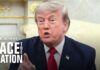
Trump’s election security address became a test of nerve for the television networks, and the protest that followed was louder than the broadcast itself.
Quick Take
- ABC, NBC, and CNN did not air Donald Trump’s election security speech live on their main television platforms.
- ABC said it would carry the speech on ABC News Live and ABC News Radio, while NBC used NBC News NOW and CNN provided a live feed online.
- Trump blasted the networks during the address and said they should lose their broadcast licenses.
- Claims that viewers are deleting the networks reflect outrage, but the reporting here confirms the broadcast choices, not measurable cancellation data.
What Happened on Air
ABC, NBC, and CNN chose not to carry Trump’s speech live on their main broadcast or linear television feeds. ABC moved the address to its streaming and radio platforms, NBC used its streaming service, and CNN said it would monitor the speech and show it online instead of on its cable channel. That meant viewers who expected a live prime-time simulcast on those networks did not get one.
The networks did not all take the same path. CBS aired at least part of the address, while Fox News carried it in full. The split mattered because Trump used the moment to accuse the networks of a “plot” and to demand punishment for what he called a refusal to cover his remarks. The speech itself focused on election security and repeated claims about election integrity.
Why the Networks Drew a Line
The refusal to air the address live was not a mystery move. Reporting said the speech contained claims tied to election fraud and 2020 election interference, and some networks chose to place it on platforms where they could add context or commentary. That fits a familiar pattern in modern political media: broadcasters often avoid giving full live time to remarks they believe may include unsupported claims.
This is also where the “blackout” language gets loaded. In plain English, the networks did not erase the speech. They shifted it to streaming, radio, or later coverage. That distinction matters. A blackout suggests silence. What happened instead was selective carriage, which is a different editorial choice and a much more common one in live political television.
The Backlash Machine
Trump quickly turned the programming decision into a political weapon. He attacked ABC and NBC by name and said they should lose their licenses. That kind of response feeds a larger media fight that he has used for years: when coverage does not flatter him, he frames it as censorship. The result is predictable. Supporters see proof of bias. Critics see another pressure campaign against the press.
The “Aunt Mary and Uncle John” reaction fits the same script. Anger at the networks is real, and so is the urge to punish them with a click, a cancel button, or a deleted app. But the available reporting does not show a verified wave of subscription cancellations. It shows a familiar burst of outrage, the kind political media thrives on because it turns one broadcast choice into a loyalty test.
The deeper story is not just about one speech. It is about how fragile trust has become between viewers, broadcasters, and political figures who know how to use that distrust. Networks now face a hard choice every time a president or candidate speaks live: carry it raw and risk spreading falsehoods, or filter it and get accused of hiding the truth. That tension will not disappear soon, and Trump knows exactly how to press on it.
Sources:
pjmedia.com, theguardian.com, abc.net.au, noticias.foxnews.com, axios.com, thehill.com, usatoday.com, bostonglobe.com, en.wikipedia.org, journalism.uoregon.edu
© targetdailynews.com 2026. All rights reserved.