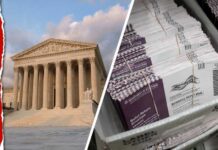
The fight over “dead voters” isn’t really about the dead—it’s about who controls the books that decide who gets to vote.
Quick Take
- DOJ Civil Rights leaders say reviews in 16 cooperating states surfaced tens of thousands of registered noncitizens and hundreds of thousands of deceased registrants still listed.
- The Justice Department has sued 29 states plus Washington, DC, demanding access to statewide voter registration rolls under federal election-list laws.
- Supporters see overdue enforcement of list-maintenance rules; critics see a federal power play that risks sloppy “purges” and public panic.
- The most important unresolved question: how many questionable registrations translate into actual illegal votes, versus outdated records that never get used.
What Dhillon’s “350,000 Dead People” Claim Really Puts on Trial
Harmeet Dhillon, serving as Assistant Attorney General for Civil Rights, has gone on the record describing what DOJ says it found after getting cooperation from 16 states: voter rolls containing “hundreds of thousands” of deceased registrants and “tens of thousands” of noncitizens listed. The headline number—at least 350,000 dead people on the rolls—grabs attention because it hits a basic expectation: election records should match reality, not ghosts.
That shock value is the point, but it also creates a trap for the public. A name on a roll does not automatically mean a ballot got cast. Common sense says bad records invite bad outcomes, yet common sense also says Americans deserve proof of actual misuse before anyone declares the system “rigged.” The DOJ campaign sits right in that tension: maintenance problems can be real even when widespread fraudulent voting is not.
The Legal Weapon: Federal List-Maintenance Rules with Real Teeth
DOJ’s approach leans on three pillars: the National Voter Registration Act, the Help America Vote Act, and the Civil Rights Act of 1960. Together, they form a federal floor for how states keep registration lists accurate and how the Attorney General can demand records to verify compliance. The current dispute isn’t abstract. DOJ wants statewide voter-roll data; many states have resisted or limited access, forcing the question into court.
That posture matters because it reframes election integrity as a records-and-audits issue, not merely a campaign-season talking point. Conservatives generally favor clean rolls because clean rolls protect lawful voters from dilution and reduce administrative chaos on Election Day. The conservative caution flag is federal overreach: Washington should not “run” elections. The key distinction is enforcement of existing law versus creating new, centralized control through litigation pressure.
Why 29 States and DC Are Getting Sued—and Why That List Is So Politically Explosive
DOJ’s lawsuits have spread across red and blue territory, undercutting the easiest accusation that it’s purely partisan. The Justice Department has named states including Utah, Oklahoma, Kentucky, West Virginia, and New Jersey in an earlier wave, followed by additional actions against Delaware, Maryland, New Mexico, Rhode Island, Vermont, and Washington. The headline number—29 states plus DC—functions like a foghorn: either massive noncompliance exists, or DOJ is using an unusually aggressive interpretation of its authority.
States pushing back often cite privacy, data security, or the fear that outside pressure leads to rushed list-cleaning that sweeps up eligible voters. That fear isn’t imaginary; bureaucracies make mistakes. Still, “privacy” can also become a convenient shield against accountability. When a state insists it maintains its rolls properly, transparency should not be a frightening word. A well-run system can prove its work. A poorly run system argues about why you shouldn’t look.
The Detail Everyone Skips: Registration Problems vs. Illegal Voting
Dhillon’s public case draws a sharp line between two realities: noncitizens registered to vote versus noncitizens actually voting. Critics highlight that only a small number of illegitimate votes have been identified so far compared with the big registration figures. That distinction deserves airtime because it clarifies what’s being measured. Bloated rolls can reflect delayed record updates, duplicate entries, and people who moved, not necessarily coordinated fraud.
Yet dismissing the registration issue as harmless misses how systems fail. Bad lists create opportunities, complicate signature verification, inflate mailing of ballots to old addresses, and undermine trust among ordinary citizens who already suspect “something’s off.” Conservatives don’t need to claim apocalypse to argue for basic stewardship: accurate lists are the minimum standard. The most responsible position demands two truths at once—fix the records, and don’t exaggerate what the records prove.
What Happens Next: Court Fights, Data Access, and the 2026 Midterm Pressure Cooker
The immediate future looks like litigation chess. DOJ wants fuller access to statewide voter-registration data; resistant states want narrower disclosures or different terms. Courts will end up deciding how far federal demands can go and how much discretion states retain. The practical stakes are huge: if DOJ gains access, the next phase becomes verification—matching death records, citizenship indicators, and duplicates across databases, then documenting how corrections occur and how errors get prevented.
Election administration always suffers when politics turns every clerical fix into a tribal battle. The constructive outcome would look boring: clear rules, careful notice procedures, robust appeals for voters wrongly flagged, and transparent reporting that separates “ineligible on paper” from “illegal ballot cast.” The destructive outcome is also predictable: headlines inflate, faith collapses, and every cleanup becomes proof of a conspiracy depending on which channel you watch.
https://twitter.com/RedState66/status/2046060373720047991
The public should demand receipts from everyone. If DOJ says the rolls include hundreds of thousands of deceased registrants, publish methodology and timelines, not just scary totals. If states claim they already comply, show the audits, show the update cadence, and show the safeguards against wrongful removal. American self-government depends on a simple bargain: eligible citizens vote, ineligible names don’t linger, and neither side treats election law like a propaganda toy.
Sources:
Trump DOJ’s Voter Rolls Grab Has Unearthed a Tiny Number of Illegitimate Votes – Democracy Docket