Democrats demanded body cameras for immigration enforcement agents but now fear the very transparency they requested could become a weapon against First Amendment protesters and political dissidents.
Story Snapshot
- DHS Secretary Kristi Noem announced immediate body camera deployment for ICE in Minneapolis after two fatal shootings lacked video evidence, with national expansion pending $20 million in congressional funding
- Democratic leaders including Sen. Ed Markey want cameras with restrictions preventing footage from being used for facial recognition surveillance of protesters, but the Trump administration rejected all limitations as undermining enforcement
- H.R. 4651 would mandate cameras with AI restrictions and privacy protections, but remains stuck in committee while ICE operates under inconsistent policies that leave implementation to individual agents
- The debate exposes a core tension between accountability for enforcement actions and fears that recorded footage could feed mass surveillance systems targeting political speech
When Transparency Becomes a Trojan Horse
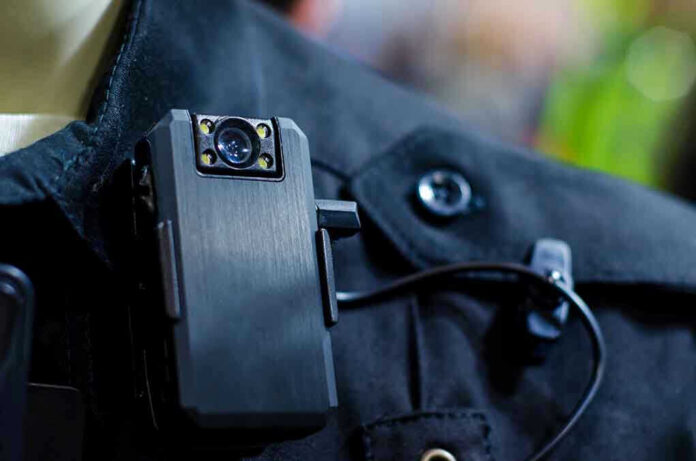
Two fatal shootings during ICE operations in Minneapolis this January lacked any video evidence, fueling public outrage and reigniting calls for mandatory body cameras. DHS Secretary Kristi Noem responded swiftly, announcing immediate camera deployment for Minneapolis agents in early February with promises of national expansion. Yet the very Democrats who demanded this accountability measure now express alarm that the footage could morph into something far more sinister than officer oversight. Their concern centers on whether recorded images from enforcement operations might be scraped into facial recognition databases to identify and track protesters exercising constitutional rights.
The Devil Hiding in Implementation Details
DHS established body camera policies years ago covering patrol activities, warrant executions, and public encounters, but left actual implementation to individual agencies like ICE and Customs and Border Protection. This decentralized approach created massive gaps in compliance due to insufficient funding, inadequate training, and weak enforcement mechanisms. The Congressional Research Service found that the absence of footage can prove as damaging as controversial recordings, yet federal appropriations for fiscal year 2026 separate camera purchases from wear mandates. Congress allocated $20 million for equipment but imposed no requirement that trained officers actually activate devices during operations.
A Chicago federal judge took matters into judicial hands by ordering trained ICE officers to activate cameras during enforcement actions, establishing a court-enforced precedent that exposes the weakness of voluntary policies. Rep. Adriano Espaillat introduced H.R. 4651 in July 2025, the Immigration Enforcement Staff Body Camera Accountability Act, mandating cameras for both ICE and CBP staff with explicit policies limiting artificial intelligence and facial recognition applications. The bill includes penalties for non-use and requires annual privacy assessments by the DHS Inspector General, but it remains referred to committee without floor votes as partisan battle lines harden.
Surveillance Paranoia or Legitimate Constitutional Concern
Sen. Ed Markey articulated Democratic anxieties bluntly when he demanded cameras for accountability while insisting on restrictions preventing suppression of free speech. The fear revolves around a specific scenario where body camera footage captures bystanders, protesters, or activists during immigration raids, then feeds those images into facial recognition systems to build target lists for future enforcement. DHS denies embedding facial recognition technology directly into body cameras and claims no existence of domestic terrorist databases tracking protesters, but acknowledges that footage could potentially be analyzed offline using separate AI tools already in the department’s arsenal.
White House Press Secretary Karoline Leavitt dismissed Democratic demands for usage restrictions as complete non-starters that would undermine ICE’s mission to remove dangerous criminals from American communities. DHS current policy prohibits filming conducted solely to document First Amendment activities but permits recording during arrests or operations where protests intersect with enforcement actions. This creates a gray zone wide enough to drive surveillance trucks through, since immigration raids in sanctuary cities frequently attract protesters whose images would inevitably appear in operational footage. The Trump administration’s aggressive enforcement posture has resulted in approximately 540,000 deportations since January 2025, far outpacing the development of accountability measures according to Brookings Institution analysis.
The Accountability Paradox Nobody Wants to Admit
The body camera debate exposes an uncomfortable truth that neither party wants to acknowledge openly. Republicans genuinely want transparency to demonstrate professional conduct during enforcement operations and counter false accusations, but resist any constraints that might create hesitation or legal liability for agents making split-second decisions. Democrats genuinely want evidence of misconduct to hold agents accountable for civil rights violations, but fear creating permanent surveillance records of the very communities they claim to protect. Both sides claim to champion transparency while each wants to control how that transparency gets weaponized politically.
The Minneapolis shootings illustrate why this matters beyond partisan theater. Absent video evidence, competing narratives about justified force versus excessive violence remain unresolved, eroding public trust regardless of the actual facts. The Congressional Research Service notes that cameras create evidentiary records that can exonerate officers or convict them, but warns that inconsistent activation and retention policies undermine their value. Federal courts have begun mandating camera use precisely because voluntary policies failed, yet judicial orders apply only to specific jurisdictions leaving a patchwork of enforcement standards across the country. The question becomes whether Americans trust the government more with cameras that might record everything or without cameras that record nothing when accountability matters most.
Sources:
Democrats fear body cameras could be ICE’s new mass surveillance tool
Noem’s ICE body camera push test of transparency
H.R. 4651 Immigration Enforcement Staff Body Camera Accountability Act
ICE expansion has outpaced accountability what are the remedies