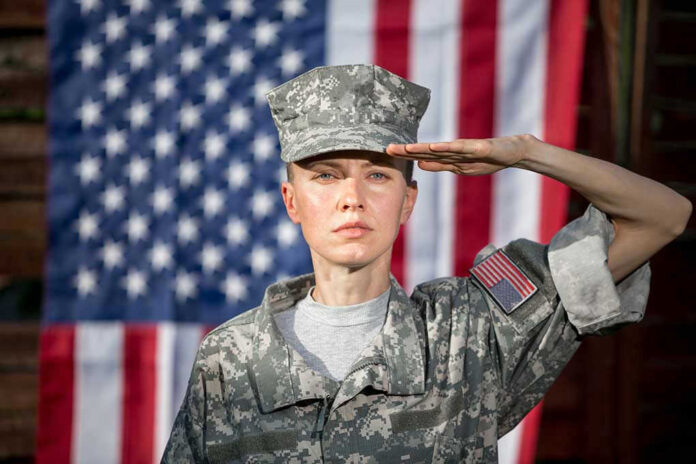
Women in ground combat roles are changing the face of the U.S. military, but at what cost?
Story Snapshot
- Women in combat roles must prove their effectiveness daily to overcome skepticism.
- The integration journey began with policy changes in 2013 and 2015.
- Women face persistent cultural and logistical challenges despite official integration.
- Performance metrics and unit cohesion remain key challenges.
The Road to Integration
Women have long been part of military history, but it wasn’t until the 2013 announcement by Defense Secretary Leon Panetta that women were formally allowed to serve in direct ground combat roles. This decision lifted a historical ban and challenged long-standing gender norms, setting the stage for the full opening of these roles in 2015. Women now serve in infantry, armor, and artillery positions, but they continue to navigate skepticism and prove their effectiveness daily.
Despite these challenges, the journey to integration has been marked by significant milestones. The first women graduated from the Army Ranger School, breaking barriers and proving that women could meet the rigorous standards previously thought to be attainable only by men. These achievements are crucial for changing perceptions and fostering acceptance within the military ranks.
Challenges and Skepticism
The military’s integration of women into combat roles has not been without its hurdles. Many women report experiencing ongoing skepticism from peers and leaders, rooted in historical exclusion and outdated gender norms. This lingering doubt compels women to demonstrate their physical capability and effectiveness consistently, often exceeding standard requirements to gain acceptance and legitimacy as combat teammates.
Efforts to adapt facilities and gear to accommodate women, along with evolving but uneven institutional changes, highlight the logistical challenges of this integration. Training standards and leadership attitudes continue to evolve, but the pace of change varies significantly across different branches and units.
Performance and Cohesion
Performance metrics play a crucial role in countering skepticism. Women in combat roles rely on physical training scores, field exercises, and deployment performance to validate their effectiveness. Yet, meeting these standards is only one aspect of their struggle. Being accepted as a full combat teammate requires building unit cohesion, an area where perceptions and team dynamics can be just as challenging as physical tests.
Unit cohesion is not merely about meeting standards but involves being perceived as an integral part of the team. This perception can affect everything from daily interactions to career advancement opportunities and underscores the complexity of integrating women into traditionally male-dominated roles.
A Broader Impact
Opening combat roles to women has broader implications beyond the military. It challenges traditional gender roles and stereotypes, demonstrating women’s capabilities in high-risk, high-stakes environments. The presence of women in these roles provides powerful role models for younger generations and reinforces the principles of equality and non-discrimination in one of the country’s most respected institutions.
The integration of women into combat roles also impacts economic, social, and political spheres. Economically, it opens promotion paths linked to combat experience, potentially influencing lifetime earnings for women veterans. Socially, it shifts perceptions of gender roles, while politically, it sets a precedent against gender-based occupational bans, influencing future debates on military policies.
Sources:
USO: History of Women in the US Military
Army Technology: Timeline of Women in the US Army
Military Families: Evolution of Women’s Roles