When New York City’s 2025 mayoral election shattered turnout records with 735,000 early ballots—fueled by a dramatic surge of young voters—the city’s political future was rewritten in just nine days.
Story Snapshot
- NYC’s early voting turnout quadrupled from the last mayoral race, totaling over 735,000 ballots.
- Younger voters led the surge, reshaping expectations for urban electoral engagement.
- Expanded early voting access and a competitive, youth-focused candidate field powered participation.
- The outcome signals lasting changes for campaign strategies and the face of city democracy.
Record-Breaking Early Voting Redefines NYC’s Political Landscape
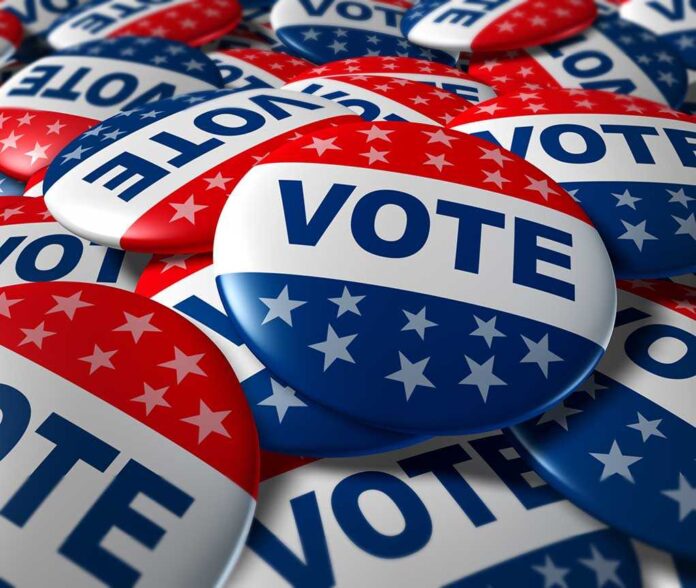
New York City’s Board of Elections reported an unprecedented 735,317 ballots cast during the nine-day early voting window for the 2025 mayoral election. This figure dwarfs previous cycles, marking more than a fourfold increase from the 2021 mayoral race. The surge began on October 25 and continued steadily through November 2, culminating in lines that snaked around blocks and daily tallies that left seasoned campaign operatives stunned. Unlike previous years, when early voting seemed an afterthought, this cycle it became the bellwether of civic energy. The city’s political operatives, pollsters, and candidates were forced to rethink turnout models on the fly as borough after borough reported record-setting participation.
Expanded early voting access, introduced statewide in 2019 and extended to nine days for local elections in 2023, set the stage for this dramatic spike. The Board of Elections coordinated more polling sites and improved logistics, ensuring a smoother experience than the system’s rocky early years. The infrastructure worked: voters—especially those under 35—showed up in droves. The impact of that demographic shift is being felt beyond the ballot box, as campaign strategists and civic reformers recognize the new normal for city elections. Many observers predict the days of anemic turnout and disengaged youth may be gone—at least for high-stakes local races.
Youth Surge: Why Millions of Young New Yorkers Voted Early
Younger voters, long considered the sleeping giant of urban politics, finally woke up in 2025. Campaigns led by progressive contenders like Zohran Mamdani invested heavily in grassroots outreach, digital organizing, and issues that matter to Millennials and Gen Z—housing, climate, and police reform. The result: a turnout wave that shifted the city’s political center of gravity. Observers note that younger voters were not just responding to messaging but to the ease of access. With polls open for nine consecutive days, flexible hours, and more locations, barriers to participation were systematically dismantled. The city’s increasingly diverse, digitally savvy youth became the most courted bloc in the election, and their response was unambiguous. Analysts suggest this engagement is more than a fluke. If these trends hold, future city races will hinge on capturing the imagination—and votes—of younger residents.
Election administrators, who once struggled to get young voters to the polls, now face a different challenge: how to sustain this enthusiasm when the novelty of expanded access wears off. Some conservative critics worry about the implications for election integrity and the potential for increased polarization, but the prevailing view among civic engagement scholars is that lowering barriers and increasing choice strengthens democracy, not weakens it.
Competitive Candidates and New Campaign Strategies
The 2025 mayoral field was unusually crowded and diverse, with established figures like Andrew Cuomo competing against younger, progressive voices and law-and-order conservatives. Each campaign adapted rapidly to the early voting surge. Mamdani’s team leaned on social media and peer-to-peer texting to turn out young voters; Cuomo’s campaign focused on citywide experience and stability, while Curtis Liwa doubled down on traditional outreach to older and more conservative voters. The competitive climate forced all campaigns to innovate. Early voting was no longer just a convenience—it became a central front in the battle for City Hall. The data-driven arms race among campaigns is likely to persist, as candidates realize that the first nine days of voting can be just as decisive as Election Day itself.
Looking ahead, political strategists predict that future candidates will have no choice but to campaign year-round, building coalitions that can mobilize early and often. The days of last-minute Election Day blitzes may be fading in relevance as early voting defines the rhythm of urban democracy.
Implications for Urban Democracy and the Future of Elections
The record turnout and youth surge have already begun to reshape expectations for civic engagement in America’s largest city. The Board of Elections’ ability to manage the spike in turnout is being hailed as a logistical victory, but the broader implications are political. Expanded access and targeted outreach proved to be force multipliers for engagement, with ripple effects likely to spread to other cities and states. Academic analysts frame the 2025 mayoral race as a “proof of concept” for modern urban democracy: when you make voting easier and more relevant, people—especially young people—respond. The test now will be whether this momentum holds in future cycles, particularly when the issues or candidates are less galvanizing. For now, the message is clear: ignore the youth vote at your peril, and never underestimate the power of access to transform civic life.
As ballots continue to be counted and the city awaits final results, one thing is certain: early voting in New York City is no longer a sideshow. It is the main event—reshaping the city’s politics, its campaigns, and, potentially, the very definition of urban democracy itself.
Sources:
New York City Board of Elections. “Early Voting Check-Ins.”
New York City Board of Elections. “Election Results Summary.”