America’s most explosive foreign policy threat in decades may not come from a rogue nation, but from a tweet—one that promises “guns-a-blazing” justice in Nigeria, all in the name of saving Christians.
Story Snapshot
- President Trump orders Pentagon to prepare for military action in Nigeria over alleged Christian persecution.
- Threats include a total cut of US aid and rapid military strikes if violence against Christians continues.
- Nigeria’s government rejects the accusations, defending its religious freedom record and sovereignty.
- The move risks destabilizing US-Nigeria relations, setting a precedent for military intervention over religious issues.
Trump’s Ultimatum: Christianity and American Muscle Collide in Nigeria
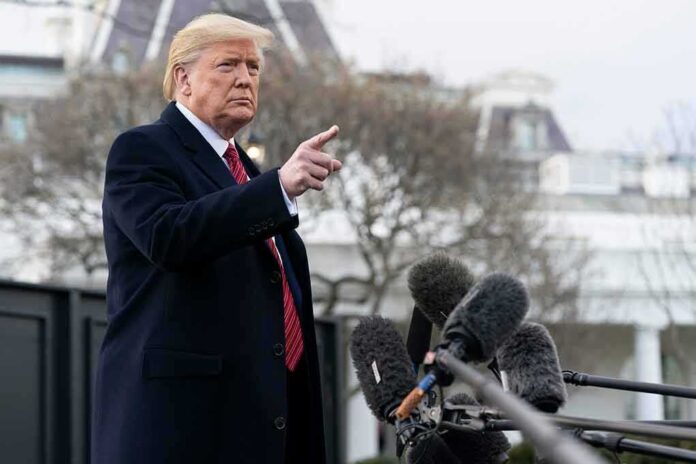
November 1, 2025, will be remembered as the day threats of American military intervention crashed into the heart of Africa—not over oil, terror, or nukes, but for the fate of Nigeria’s Christians. Trump’s designation of Nigeria as a “country of particular concern” for religious-freedom violations came hours before he unleashed a digital broadside, vowing to cut all US aid and threatening military strikes “fast, vicious, and sweet” if Nigeria failed to protect Christian communities. A single tweet sparked a diplomatic firestorm and Pentagon contingency planning—an American president openly promising to use force to police religious violence in another sovereign nation.
The world watched as Nigerian President Bola Ahmed Tinubu shot back, defending his nation’s record and identity: “Religious freedom and tolerance have been a core tenet of our collective identity and shall always remain so. Nigeria opposes religious persecution and does not encourage it.” Tinubu’s calm but firm rejection underscored the gravity of the moment. Never before had a US president threatened military action in Africa’s largest democracy over religious claims, and the global implications were immediate. Would the world’s most powerful military really intervene to save Christians in a nation home to 100 million of them?
Historical Context: Faith, Violence, and the Nigerian Fault Line
Nigeria’s religious landscape is a tapestry as complex as its politics. Nearly evenly split between Muslims and Christians, the nation’s north has suffered horrifying attacks by groups like Boko Haram—terrorists who have killed innocents of all faiths. Yet, the narrative of “systematic Christian persecution” remains heavily contested. American politicians, led by Senator Ted Cruz, have pushed for years to label Nigeria a religious freedom violator, tying foreign policy to evangelical concerns. Trump’s move wasn’t born in a vacuum; it’s the culmination of years of pressure from his political base and religious freedom advocates, weaponizing humanitarian rhetoric for maximum political impact.
The immediate result: American aid to Nigeria hangs in the balance, and the Pentagon is now tasked with conjuring military options for a nation of 200 million. Ordinary Nigerians—Christian and Muslim alike—stand to lose the most, with development programs and economic stability now hostages to a diplomatic standoff. The muscle-flexing may play well with certain voters, but for Nigeria, the threat of intervention is an existential challenge to its sovereignty.
High Stakes and Unintended Consequences: Who Wins, Who Loses?
Diplomatic relations between the US and Nigeria have entered uncharted waters. Trump’s threats have already sown mistrust, risking years of partnership on counterterrorism and economic development. The Pentagon’s new orders mean resources are being diverted, and every West African neighbor is now on edge, wondering if America’s next “police action” could land on their doorstep. The specter of aid withdrawal leaves Nigeria’s government scrambling to reassure international investors and development partners.
Beyond the headlines, the real danger lies in precedent. If America can threaten—or use—military force over religious issues here, where does it stop? Critics warn of a slippery slope: today it’s Nigeria, tomorrow any country whose internal issues clash with Washington’s interpretation of religious freedom. Experts like Graham Wood have publicly questioned the logic of an “existential threat” to Christianity in a country with one of the world’s largest Christian populations—a reminder that the facts don’t always match the fury of the rhetoric.
The Long Game: American Power, African Sovereignty, and the Future of Intervention
The story is far from over. No shots have been fired, but the Pentagon stands ready. Nigerian Christians and Muslims alike face a future clouded by uncertainty, as foreign policy and faith become pawns in a high-stakes global game. The world asks: Is this a sincere defense of the persecuted, or a new chapter in the old playbook of using force—and faith—for political gain?
As the dust settles, one thing is clear: the next move may not come from a general or a diplomat, but from a president’s phone. The world, and Nigeria’s 200 million citizens, are now waiting for the next tweet.
Sources:
Jurist: Trump threatens military action and aid cut to Nigeria over Christian persecution claims