The death of a young protester at Jerusalem’s largest ultra-Orthodox rally in years has exposed a raw, unresolved battle for the soul of Israel—where faith collides with national duty and a single, tragic misstep can turn a political standoff into a national reckoning.
Story Snapshot
- A massive ultra-Orthodox anti-draft protest in Jerusalem ended in disaster when a young man fell to his death from a construction site.
- The demonstration, drawing upwards of 200,000, unified rival Haredi factions in rare solidarity against military conscription efforts.
- Clashes with police and over 140 injuries highlighted escalating tensions as opposition politicians renewed calls for universal conscription.
- The government faces mounting legal, political, and social pressure to resolve the draft exemption crisis amid deepening societal rifts.
The Fatal Protest That Shook Jerusalem
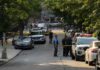
On October 31, 2025, Jerusalem’s cityscape became the stage for a confrontation that had simmered for decades: the Israeli state’s demand for universal military service versus the ultra-Orthodox (Haredi) community’s refusal to relinquish religious study. That day, an estimated 200,000 demonstrators—students, rabbis, elders—blocked thoroughfares, scaled unfinished buildings, and formed a human bulwark against what they perceived as an existential assault on their way of life. The protest’s crescendo came not from a fiery speech or a police standoff, but from a harrowing moment when Menachem Mendel Litzman, a teenager by some accounts, twenty by others, plunged from a high-rise under construction and died at the scene. His fall, whether a tragic accident or a desperate act, instantly became the focal point of a nation’s collective anxiety.
Police scrambled to control the chaos, treating over 140 injuries while ambulances navigated gridlocked streets. The city’s arteries—both literal and symbolic—were clogged by the sheer volume and passion of protest. The normally fractious Haredi factions, renowned for their doctrinal disputes, stood shoulder to shoulder, united by a shared threat. Jerusalem, the heart of Israeli political and religious life, became a symbol of a country torn between its founding promises and the hard realities of a nation at war, short on soldiers and long on grievances.
The Roots of the Draft Exemption Crisis
Israel’s military draft has always been more than a bureaucratic requirement—it is a rite of passage, a pillar of shared citizenship. But for the Haredi community, the draft represents a direct challenge to religious autonomy. Since the state’s founding, ultra-Orthodox men have been exempt if they commit to full-time Torah study, a deal struck by Israel’s founding fathers to secure Haredi support for the nascent state. Over the decades, as the Haredi population swelled and the secular-religious divide deepened, what began as a narrow accommodation ballooned into a national controversy. Pressure mounted after Israel’s Supreme Court declared the blanket exemption unconstitutional, demanding new legislation to balance equality and tradition. Political gridlock, coalition deals, and the ever-present threat of government collapse complicated any real solution.
This legal and political impasse became untenable against the backdrop of war and rising casualties on Israel’s battlefields. The military’s urgent need for manpower clashed with the Haredi community’s fear of assimilation and secularization. For many Haredim, military service is not just an inconvenience—it is a surrender of religious identity. In this context, the protest was not only a show of force, but a desperate plea for survival, staged in the city that embodies both their faith and their stake in the nation’s future.
Political Fallout and Societal Aftershocks
The aftermath of the deadly protest has been swift and severe. Opposition leaders, seizing on the tragedy, renewed demands for the immediate end of “unjust privileges” and called for every citizen to share the burden of national defense. The government, led by Prime Minister Netanyahu and propped up by Haredi coalition partners, faces an impossible balancing act: appease the ultra-Orthodox base and risk violating Supreme Court orders, or enforce universal conscription and gamble with political survival. The unity displayed by the Haredi factions during the protest signals a new phase of resistance, one that could see even larger, more disruptive demonstrations if their exemption is threatened again.
Within the ultra-Orthodox enclaves, grief and suspicion run deep. The death of Menachem Mendel Litzman has become a rallying cry, fueling resentment toward state authorities and hardening communal boundaries. The trauma of the event—and the spectacle of police in riot gear confronting black-hatted yeshiva students—has only amplified mistrust. Conversely, many secular Israelis see the episode as proof that the status quo is unsustainable and that equality in national service cannot be continually deferred at the cost of social cohesion and military readiness.
Israel at a Crossroads: The Battle for Identity and Survival
This protest—and the death that punctuated it—has forced a reckoning that goes far beyond the specifics of draft law or coalition math. The dilemma at its core is both ancient and urgent: Can a nation founded as both Jewish and democratic sustain a permanent exemption for a growing segment of its population? Security analysts warn that continued exemptions could undermine the IDF’s fighting strength, especially as Israel faces threats on multiple fronts. Sociologists point to the protest’s scope as a testament to the depth of the Haredi community’s resistance to integration. Legal scholars, meanwhile, see a looming constitutional crisis, as government delay collides with court mandates and public impatience.
The path forward remains unclear. What is certain is that the unity, scale, and tragedy of this protest have set a new precedent—not just for Haredi activism, but for the broader struggle over who defines the meaning of citizenship, sacrifice, and belonging in Israel’s fractious democracy. The next chapter, whether written in courtrooms or in the streets, promises to be even more volatile.